|
|
| Produce is usually the first department shoppers walk through, and it shapes how they judge the rest of the store. According to IFPA’s 2025 Produce Supermarket Benchmarks, the average supermarket produce department generates $1,119,073 a year. Assuming a 16-hour operating day, that is roughly $190 for every hour the store is open. |
|
$1,119,073
Average annual produce sales per store (IFPA)
|
|
≈ $190
In produce sales for every hour the store is open
|
|
| Few retailers track what happens to that revenue when a display comes off the floor for cleaning. The hours a case spends stripped, scrubbed and reset show up as lost sales, added labor and higher shrink, but they rarely appear as a line item on a P&L. |
Why produce displays go offline
|
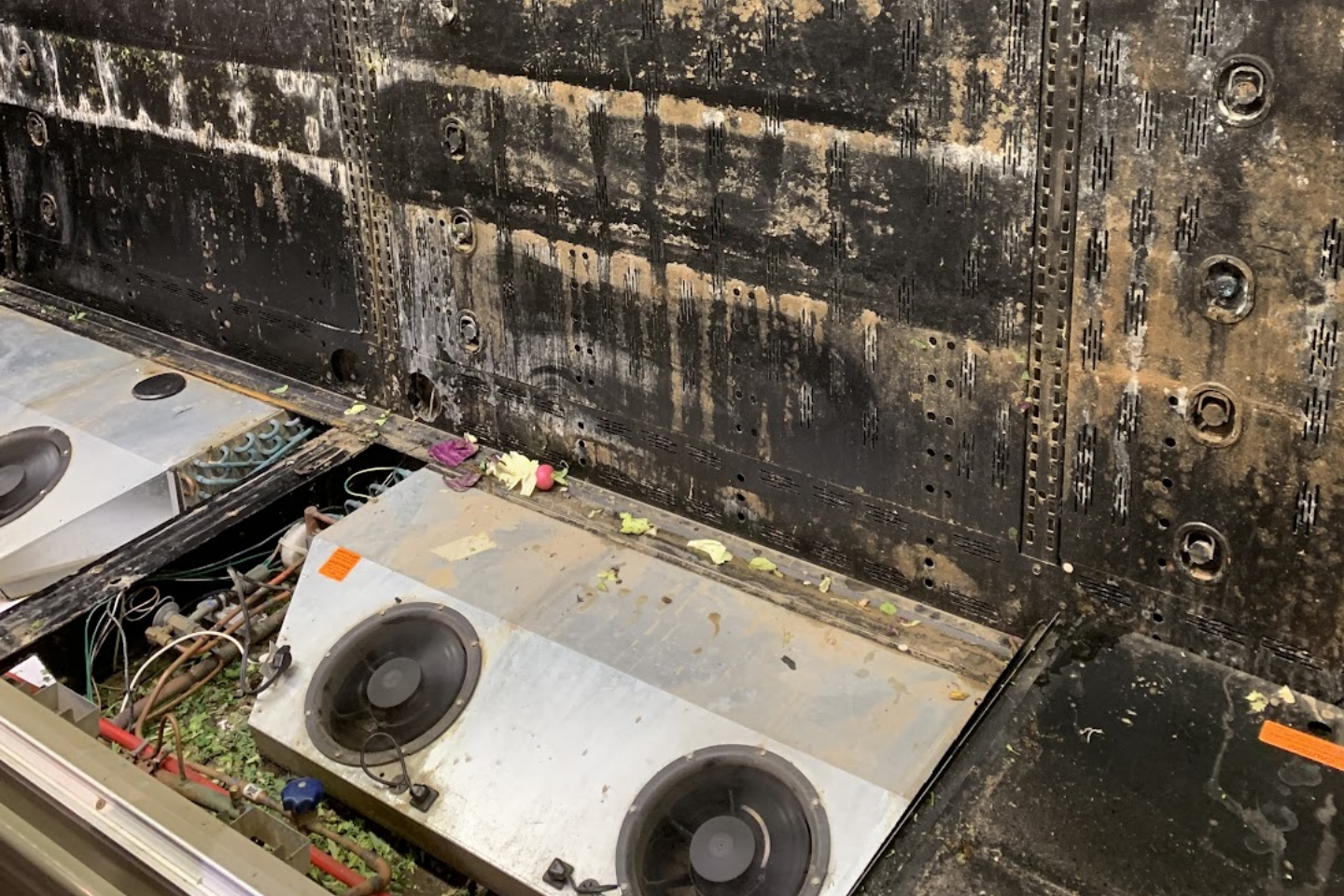
| Refrigerated produce cases need frequent cleaning. Moisture, soil and damaged product build up quickly and can harbor mold and bacteria, including E. coli and Salmonella. Regular sanitation is a core part of any produce food safety program. |
| With conventional wire racking and fixed shelving, cleaning a case typically takes it out of service entirely: |
| Conventional case cleaning: the display is offline the whole time |
| 1 |
Pull all product and move it to carts or the walk-in cooler. |
| 2 |
Remove racks and shelves, many held by fasteners and joints that trap debris. |
| 3 |
Scrub, sanitize, rinse and dry the case and each shelf. |
| 4 |
Reinstall the fixture and rebuild the set to planogram. |
| 5 |
Restock, cull damaged product and face the section. |
|
|
|
| During that process the display is empty or blocked off, and shoppers either wait, substitute or leave without the item. Because the job is so disruptive, many stores schedule it after close or let it slip. A slipping schedule creates food safety exposure of its own. |
Where the cost shows up
|
| Lost sales. IFPA reports average produce sales of $1,119,073 per store with a 39% gross margin. Nothing on an empty display can sell. IHL Group research reported by The Food Institute estimated that out-of-stocks cost North American food retailers 5.9% of total sales. Cleaning downtime is a self-inflicted out-of-stock. |
| Labor. Conventional case cleaning is slow, manual work. Produce industry veteran Armand Lobato, writing in The Packer, recalled cleaning the wet rack every week as a part-time clerk. The work started at the 10 p.m. close and ran until about 1 a.m. Pulling product and moving it to the walk-in took roughly half an hour before any cleaning began. Labor already runs about 8% of produce sales (IFPA), so every extra hour of teardown and reset cuts into department contribution, which IFPA estimates at about 25% of sales. |
| Shrink. Produce shrink averages 6% of sales (IFPA). Each time product is pulled, moved to the cooler and restocked, it gets handled again and spends more time outside the case. That makes it more likely to bruise or be culled. |
| The produce P&L, as a share of sales |
| Gross margin |
|
39% |
| Contribution |
|
25% |
| Labor |
|
8% |
| Shrink |
|
6% |
| Source: IFPA, 2025 Produce Supermarket Benchmarks |
|
| Shopper perception. In a 2021 Siffron survey conducted by Momentive, consumers said that when a store carries a large amount of fresh produce, 56% spend more time and 51% spend more money in the department. In the same survey, 65% said they are more inclined to return. More recent research points the same way. In Logile’s 2026 State of Fresh Grocery Shopping Report, 84% of shoppers said a poorly maintained produce or fresh section affects how they view the entire store. |
| What a well-kept produce department does for shoppers |
| Poor upkeep affects view of whole store |
|
84% |
| More inclined to return |
|
65% |
| Spend more time in produce |
|
56% |
| Spend more money in produce |
|
51% |
| Sources: Logile, 2026 State of Fresh Grocery Shopping Report (84%); Siffron survey conducted by Momentive, 2021 (all others) |
|
Modeling the lost-sales impact
|
| The model below estimates lost sales for an average store. The annual sales figure comes from IFPA; every other input is an illustrative assumption you can replace with your own numbers. |
| Input |
Value |
| Annual produce sales per store (IFPA, 2025) |
$1,119,073 |
| Produce sales per open hour (16-hour day) |
~$190 |
| Share of produce sales on the display being cleaned |
20% |
| Hours offline per day |
2 |
| Share of affected sales lost rather than delayed |
50% |
| Lost sales per store per year |
~$14,000 |
| Lost gross margin at 39% |
~$5,500 |
| Lost sales across a 100-store chain |
~$1.4 million |
|
| These figures cover lost sales only. They leave out cleaning labor, added shrink and the longer-term cost of shoppers who decide a competitor runs a better-kept produce department. |
How ModoShelf reduces cleaning downtime
|
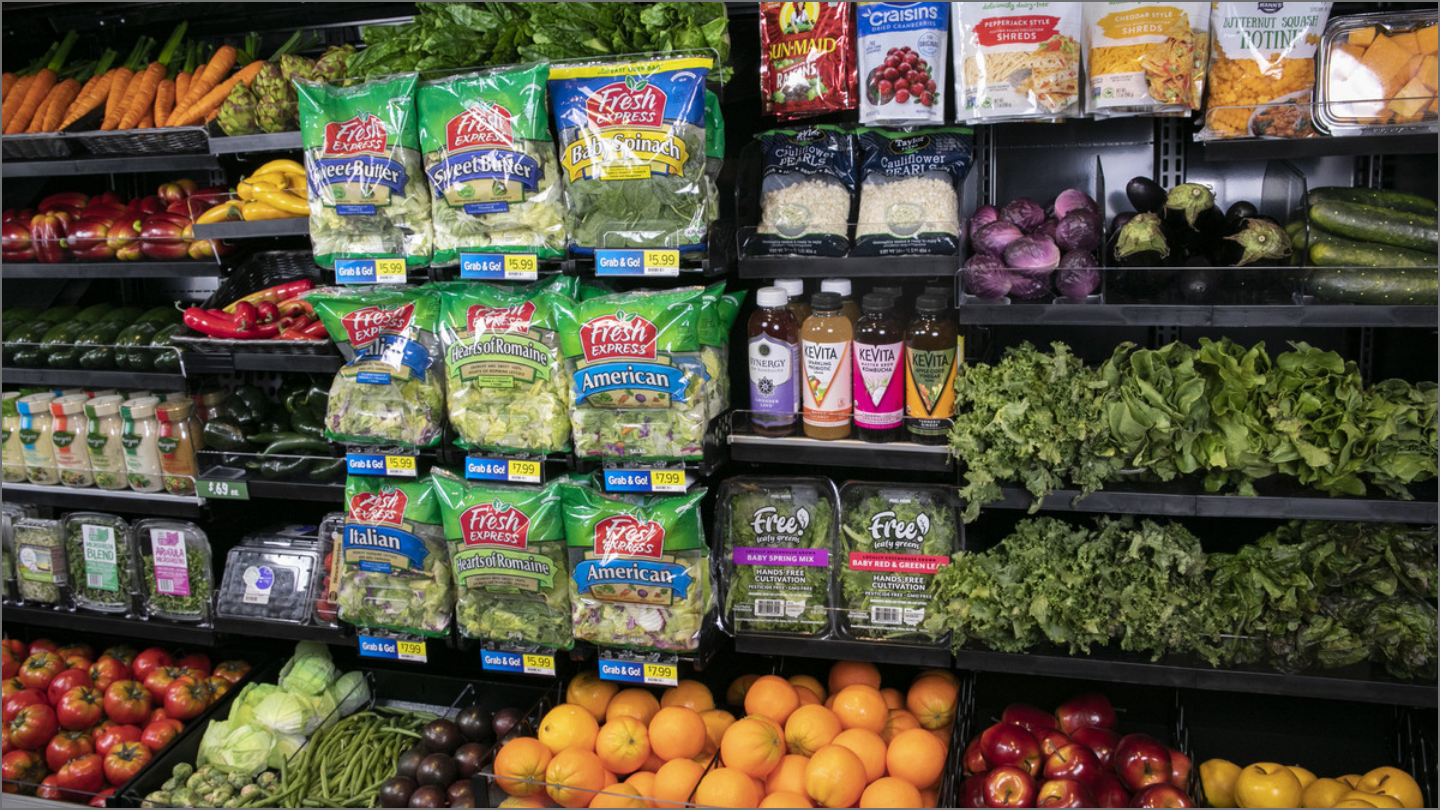
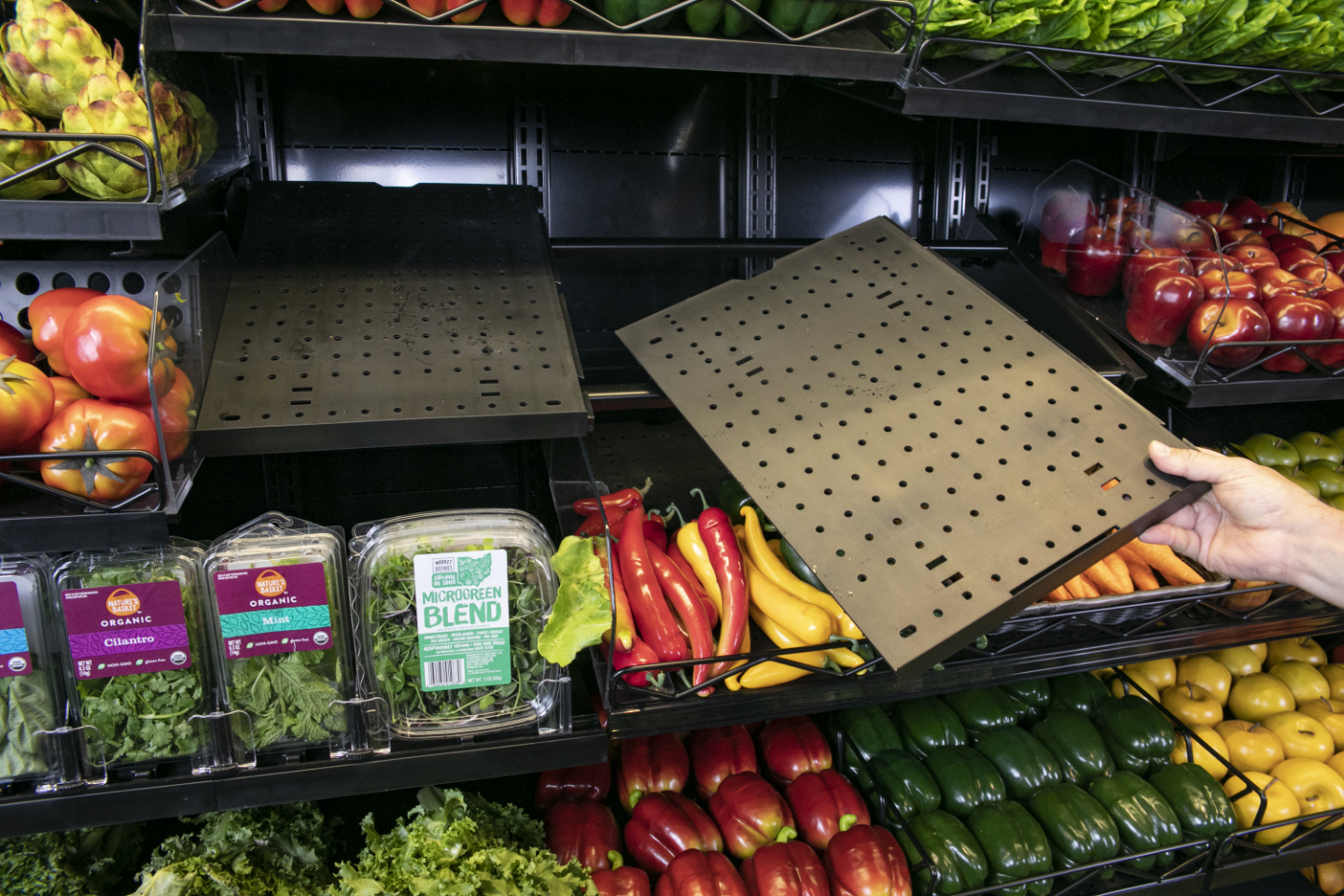
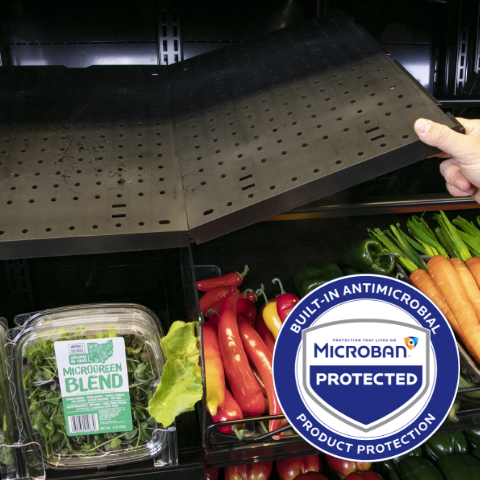
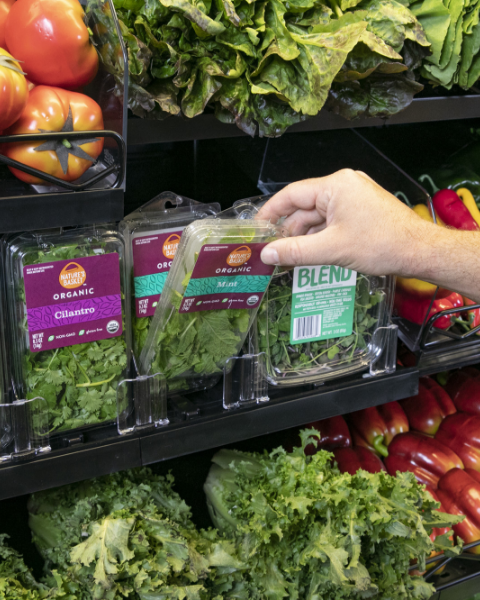
| ModoShelf is designed so the fixture stays in place during cleaning. The shelf surface is made of removable ABS tiles on a stainless steel frame. Staff lift out tiles, wash them and set them back on the same frame. Only the section being cleaned comes off the floor, and the planogram stays intact. |
|
|
| Stores can shorten the process further by keeping a set of spare tiles on hand. Instead of waiting for a dirty tile to be washed and dried, an associate drops a clean one into place and restocks the section right away. The used tiles go to the dishwasher on the team’s schedule, off the sales floor. That turns cleaning into a quick swap rather than a stop-and-wait task, and the display is back to selling within minutes. |
| The ModoShelf tile swap: the rest of the display keeps selling |
| 1 |
Lift out the dirty tiles from one section. |
| 2 |
Drop in clean spare tiles. |
| 3 |
Restock the section and get back to selling. |
| Used tiles go through the dishwasher later, off the sales floor. |
|
 |
| Well Merchandiser |
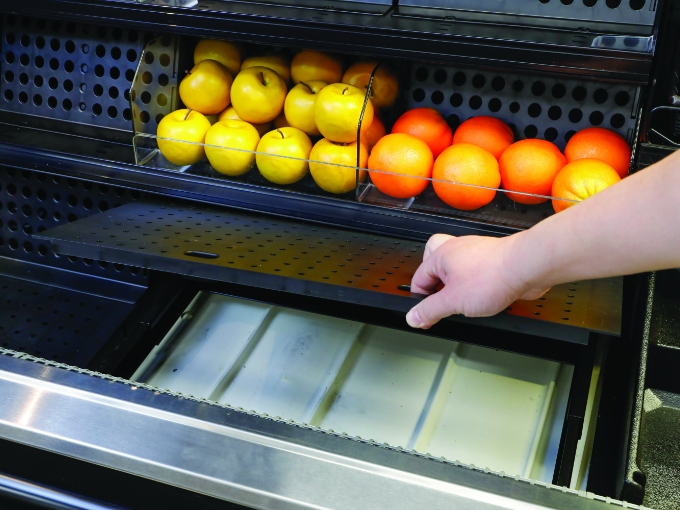
| The ModoShelf Well Merchandiser replaces the wire racking in the bottom of refrigerated cases. That gives associates easier access for cleaning, and its perforated top adds merchandising space along the case floor. One person can set up the system in minutes without tools. |
|
|
 |
| Inventory Blockers |
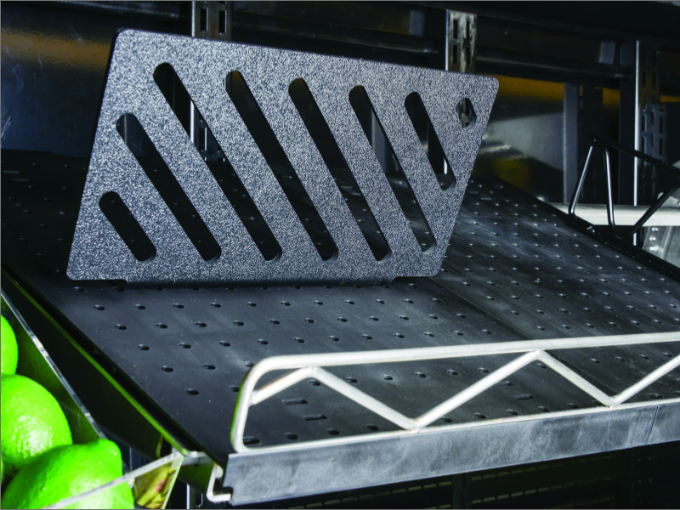
| ModoShelf Inventory Blockers help control how much product sits on the shelf. Each blocker sets a defined product area, so associates stock a set amount of product, held forward where shoppers can reach it. The display still reads as full. Less excess product on the floor means less exposure to handling and spoilage, which helps reduce shrink and supports consistent rotation. The blockers have large openings and lift out along with the tiles, so they don’t add steps to cleaning. |
|
|
| Shorter cleaning time also makes schedules easier to keep. When sanitation no longer means shutting down an entire display, teams can stay on their cleaning schedule instead of deferring the work to a late shift. |
Built-in Microban® antimicrobial protection
|
|
|
|
ModoShelf tiles are manufactured with Microban® antimicrobial technology built into the material. Because the protection is part of the tile rather than a surface coating, it won’t wash off in the dishwasher or wear away over time. It works continuously to inhibit the growth of bacteria, mold and mildew that can cause stains, odors and deterioration on the shelf surface.
For produce teams, the practical benefit is that shelving stays cleaner between scheduled cleanings. Microban works alongside a store’s sanitation program, not in place of it, and regular cleaning and sanitizing are still required.
|
|
| Microban® antimicrobial product protection is limited to the product itself and is not designed to protect users of these products from disease-causing microorganisms, foodborne illness, or as a substitute for normal cleaning and hygiene practices. Microban® is a registered trademark of Microban Products Company. |
Keep fresh departments clean and selling
Cleaning can’t be skipped, but most of the downtime that comes with it can be avoided. Every hour a produce display sits empty costs sales, labor, product and shopper confidence. ModoShelf helps retailers keep fresh departments sanitary without pulling them off the floor.
To estimate what reduced cleaning downtime could mean across your stores, contact Siffron to speak with a fresh merchandising specialist.
Talk to a fresh specialist |
|
|
| Sources |
IFPA, 2025 Produce Supermarket Benchmarks
The Food Institute “Out-of-Stocks Cost Grocery Retailers Billions”
Armand Lobato, “The dirty job no one else wanted,” The Packer, April 19, 2023
Siffron, ModoShelf
Siffron, ModoShelf Inventory Blockers
Siffron, “How to Optimize Your Produce Coolers for Cleaning,” November 22, 2023
Microban, “ModoShelf: An Innovative Antimicrobial Shelving Solution by siffron and Microban”
The Shelby Report, coverage of Logile’s 2026 State of Fresh Grocery Shopping Report, June 16, 2026 |